
When Is It More Than Stress? Recognizing the Signs It May Be Time to Seek Mental Health Support
We all experience stress. A demanding job, family responsibilities, financial concerns, health challenges, or major life changes can leave us feeling overwhelmed from time to time. In many cases, stress is a normal response to life's demands and improves once the situation becomes more manageable.
But sometimes, what starts as everyday stress begins to affect how you think, feel, and function. When those feelings linger or begin interfering with your daily life, it may be worth taking a closer look.
At Hamptons NP in Psychiatry in Westhampton Beach, many patients tell us they waited months — or even years — to seek support because they assumed they just needed to "push through." One of the most important things to know is that you don't have to wait until you're in crisis to benefit from mental health care.
Understanding the Difference Between Stress and a Mental Health Concern
Stress is your body's natural response to a challenge or demand. It can be short-term, such as preparing for a presentation or caring for a loved one during an illness. Once the stressful situation passes, your mind and body often return to their usual balance.
Mental health conditions such as anxiety or depression are different. While stress can contribute to these conditions, symptoms often persist even after the original stressor has improved and may begin affecting relationships, work, sleep, or overall quality of life.
The difference isn't always obvious, which is why a thoughtful mental health evaluation can be helpful.
Signs It May Be Time to Reach Out
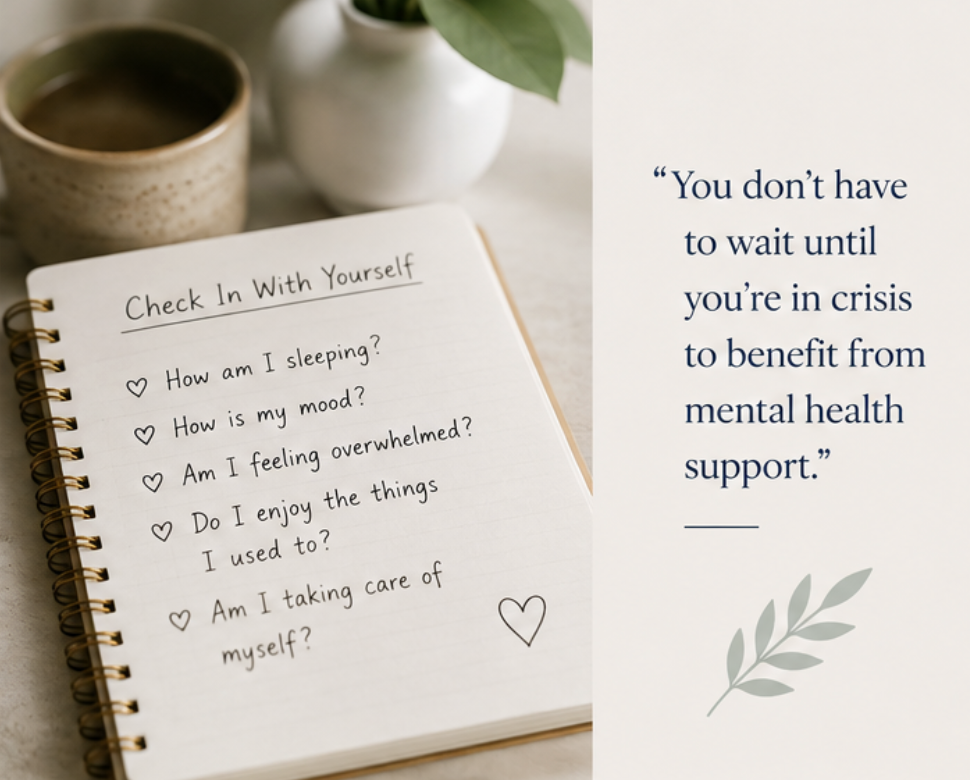
Everyone experiences emotional challenges differently, but there are some common signs that it may be beneficial to speak with a mental health professional.
You may notice:
Feeling anxious or worried most days
Difficulty relaxing, even during quiet moments
Feeling overwhelmed by everyday responsibilities
Changes in sleep, including trouble falling or staying asleep
Loss of interest in activities you once enjoyed
Persistent sadness or irritability
Difficulty concentrating or making decisions
Feeling emotionally exhausted, even after resting
Withdrawing from family, friends, or social activities
Feeling like you're simply "not yourself"
Experiencing one or more of these symptoms doesn't necessarily mean you have a mental health condition. However, if they're becoming more frequent, lasting several weeks, or interfering with daily life, it's worth having a conversation.
If you are in crisis or need immediate support, please don't wait — visit our Emergency Resources page or call or text 988, the Suicide & Crisis Lifeline, any time.
High-Functioning Doesn't Always Mean You're Doing Well
One of the biggest misconceptions about mental health is that if you're still going to work, taking care of your family, and meeting your responsibilities, everything must be fine.
Many people continue functioning at a high level while quietly struggling with anxiety, chronic stress, burnout, or depression.
They often describe feeling:
Constantly "on edge"
Mentally exhausted
Emotionally disconnected
Easily overwhelmed
Unable to enjoy the things they used to love
Outwardly, everything appears under control. Internally, it feels very different.
Seeking support doesn't mean you've failed. It means you're paying attention to your well-being before symptoms become more difficult to manage.
What Happens During a Mental Health Evaluation?
Many people delay making an appointment because they aren't sure what to expect.
At Hamptons NP in Psychiatry, the first appointment is designed to be a conversation — not an interrogation.
We'll talk about your current concerns, your health history, lifestyle, stressors, sleep, and goals for care. Together, we'll explore what's contributing to how you're feeling and discuss treatment options that fit your individual needs.
For some people, that may include medication management. For others, it may involve supportive therapy, lifestyle recommendations, or simply establishing a plan and monitoring symptoms over time.
Care is always collaborative, individualized, and grounded in evidence-based practice.
You Don't Have to Wait Until Things Get Worse

One of the most common things we hear from patients is, "I wish I had come in sooner."
Mental health care isn't only for moments of crisis. It can also provide support during life transitions, periods of increased stress, relationship changes, career challenges, grief, or simply when you no longer feel like yourself.
Reaching out early often allows for more proactive, personalized care.
Mental Health Support in Westhampton Beach and the Hamptons
At Hamptons NP in Psychiatry, Carol Ann Payton, PMHNP-BC, FNP, provides individualized, evidence-based psychiatric care from our Westhampton Beach office, with telehealth options available for patients throughout the Hamptons and surrounding areas. With more than two decades of healthcare experience, including years in critical care, Carol brings a calm, grounded approach to every evaluation.
Our goal is to provide a supportive space where you feel heard, respected, and involved in your own care — whether you're dealing with anxiety, depression, stress, burnout, or simply want to check in on how you're doing.
If you've been wondering whether it's time to seek support, trust that asking the question is often an important first step.
Frequently Asked Questions
-
Stress is usually connected to a specific situation and often improves as that situation resolves. Anxiety may persist even when there isn't an obvious cause and can begin affecting sleep, concentration, relationships, and daily activities. A mental health evaluation can help determine what's contributing to your symptoms.
-
No. Many people benefit from support long before reaching a crisis point. Seeking care early can help you better understand your symptoms and develop strategies to improve your overall well-being. If you are in crisis right now, visit our Emergency Resources page or call or text 988.
-
Not necessarily. Every treatment plan is individualized. During your evaluation, you'll discuss your symptoms, goals, and preferences to determine the most appropriate approach to care.
-
That's completely okay. Many first-time patients feel uncertain about what to expect. The initial appointment is simply an opportunity to talk through your concerns, ask questions, and explore whether treatment may be helpful.
-
Yes. In addition to in-person visits at our Westhampton Beach office, telehealth appointments are available for added flexibility and accessibility.
